
9/11: Ten Years Later
“If the attacks hadn’t happened, I don’t know where I’d be. I probably would have done something entirely different with my life.”
— Midshipman Michael Newton ’13
It is very hard for many of us to believe that a decade has passed since the Twin Towers collapsed, the Pentagon was hit and Flight 93 went down in a Pennsylvania field. We can easily recall where we were and friends and family who were affected. We are still at war because of it and have lost many alumni in the process. The Academy went to FPCON Bravo leading up to the anniversary, reminding us here yet again that we remain unsettled with that horrific day in American history so close to us still. It is a severe understatement to say that our lives have changed profoundly because of 11 September 2001.
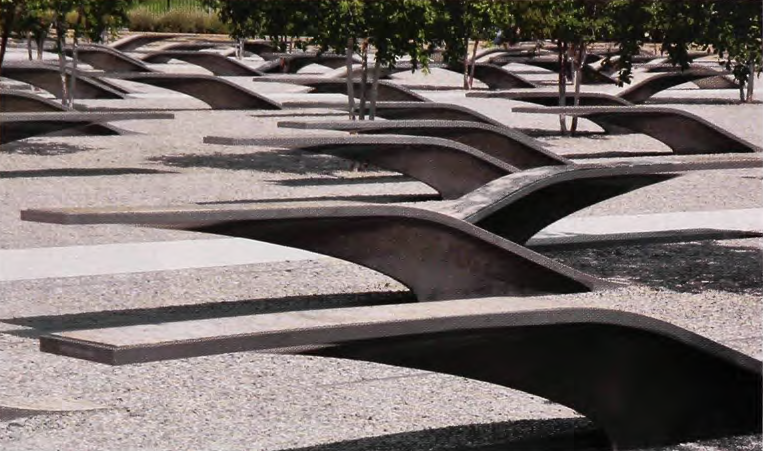
In the space of these 10 years, we finally captured and killed the perpetrator, Osama Bin Laden, the al-Qaeda leader from Saudi Arabia, and have captured and/or killed many members of al-Qaeda and the Taliban. Rebuilding of the west side of the Pentagon (nearly two million square feet of office space sustained damage from American Airlines Flight 77) began almost immediately, known as the Phoenix Project. Reconstruction was completed by the one-year anniversary, including with indoor memorial and a chapel at the point of impact. The Pentagon Memorial, a park on 1.93 adjacent acres in memory of the 184 victims, 10 of them our alumni, opened on 11 September 2008.
The World Trade Center Complex, the 16-acre site where thousands died (including four of our alumni), work has only been completed on Building 7, but work has begun on 1 (to be the tallest building in the United States) and 4. The plan is for five new skyscrapers and the National September 11 Memorial and Museum to fill the complex.
The field, an old strip-mining site, scarred by Flight 93 near Shanksville, PA, is now the National Park Service’s Flight 93 National Memorial set on 2,200 acres. Phase One was dedicated this past 10 and 11 September in honor of the 40 victims who died there. The land has been minimally touched since the investigators left and the County Coroner back-filled the crater.
The Navy has since named three ships in commemoration of the locations each of the planes came down: NEW YORK (LPD-21, commissioned in 2009), ARLINGTON (LPD-24, commissioned in March 2011) and SOMERSET (LPD-25, still under construction). Steel from each of the three sites was used in the construction of these ships. NEW YORK was in New York Harbor in honor of the 10th anniversary of the attacks.
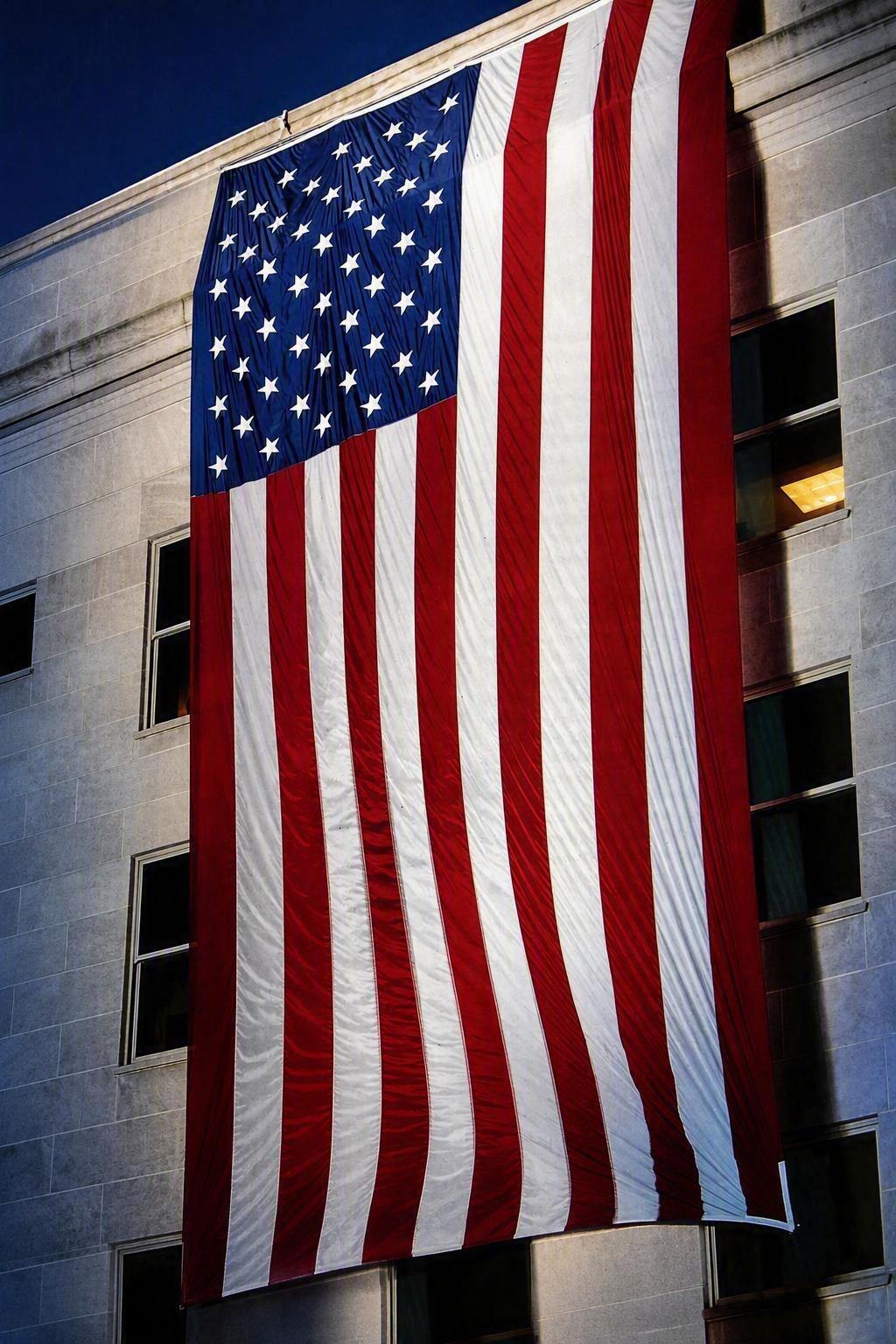
Members of the Class of 2002 found themselves graduating during a time of war with their classmates in younger classes now being prepared for that inevitability. Many midshipmen are currently at the Academy directly because of 9/11, driven to want to protect our country and defend against terrorism because of what they witnessed. They were in elementary and middle school back then, too young to be forced to understand such an atrocity. Even worse, some were left without a parent.
Midshipman Michael Newton ’13 was one such child. His father was on Flight 77.
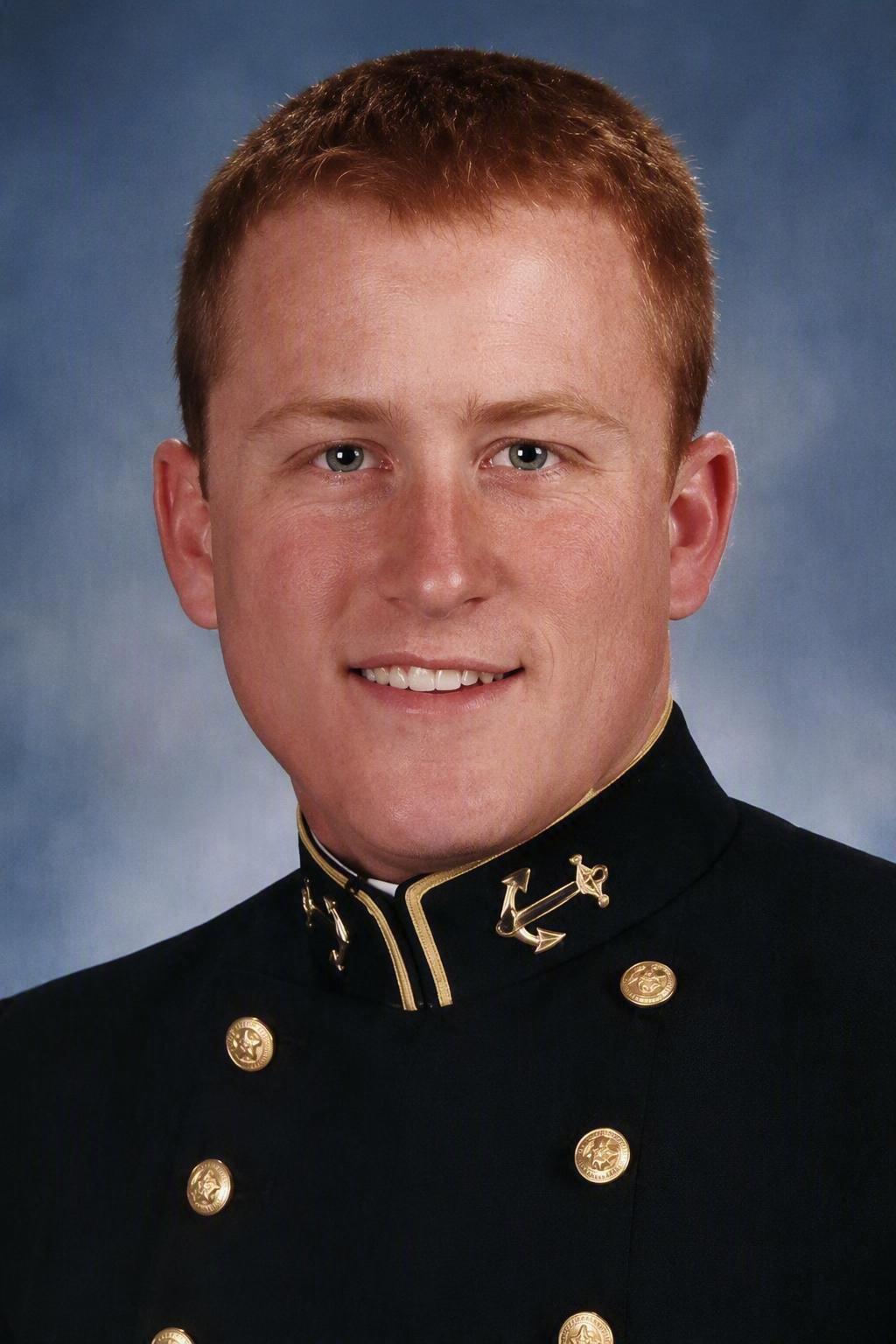
His family had recently relocated to the DC area from California as his father, Christopher, opened new headquarters as CEO of Paris-based Work | Life Benefits. It would also cut half the commute time to Paris off, giving him more time with his family: wife Amy, daughter Sarah (6) and son Michael. “That day,” recalled Midshipman Newton, “my sister, mom and I all drove to the airport to drop him off. He was going back to LA to tie up loose ends and pick up our dog. I hugged him, said goodbye and went off to school. In school, my teacher and others started whispering amongst themselves and kids were getting picked up to go home. I never got picked up, so I already knew something was up. I took the bus home and was picked up by my neighbor, so by then I was even more confused. Then eventually I was taken to another neighbor’s house where my mom and sister were, and we had a representative from American Airlines come to deliver the news about Flight 77. I was 10.”
The weeks after that were a blur for him, only remembering not going to school and relatives flocking to his family. “I can’t pull many details from about ’01 to ’03, really,” he admitted. In the years since, he has not worn this loss on his sleeve and has not met anyone else connected like he is to 9/11. Every year on the anniversary, he and his family go to the Pentagon. They were there when they broke ground on the memorial and for the dedication ceremony, they were there for the latest addition of the arch, and they were there for the service on the 10th anniversary. They will be there next year, too.
“It’s defined my life,” Midshipman Newton said. “If the attacks hadn’t happened, I don’t know where I’d be. I probably would have done something entirely different with my life. It’s shaped the way I look at the world. People expect me to be revengeful—I don’t feel like I have a sense of revenge towards the people who attacked us. But that’s not how my family chose to be, so I decided not to be that way either.”
Asked if he believes 9/11 was the pivotal moment that made him want to go to the Naval Academy, he paused and thought of many reasons. “I was thinking about this last night,” he said, “trying to pinpoint when I decided to look at the Naval Academy. There were so many government agencies and foundations that came forward to help the families after 9/11 they were awesome at helping support us, and from that I gained an appreciation for what the American people had done for my family. Also, because it happened at the Pentagon, we got to know a lot of military people just going to functions there, and I actually became acquainted with Admiral Mullen and was able to talk to him. It was a culmination of so many things. It fell into place.”
Another factor was his grandfather, a line officer in the Navy. “I grew up watching Victory at Sea and old black and white Navy movies with him. I had considered the military before 9/11 because of him, so he was sort of the seed and 9/11 was the water.”
Midshipman Newton is a history major, has selected surface warfare, was on the varsity offshore sailing team for two years and recently switched over to the rock climbing club and is a member of the National Eagle Scout Association.
The Voice of the Pentagon
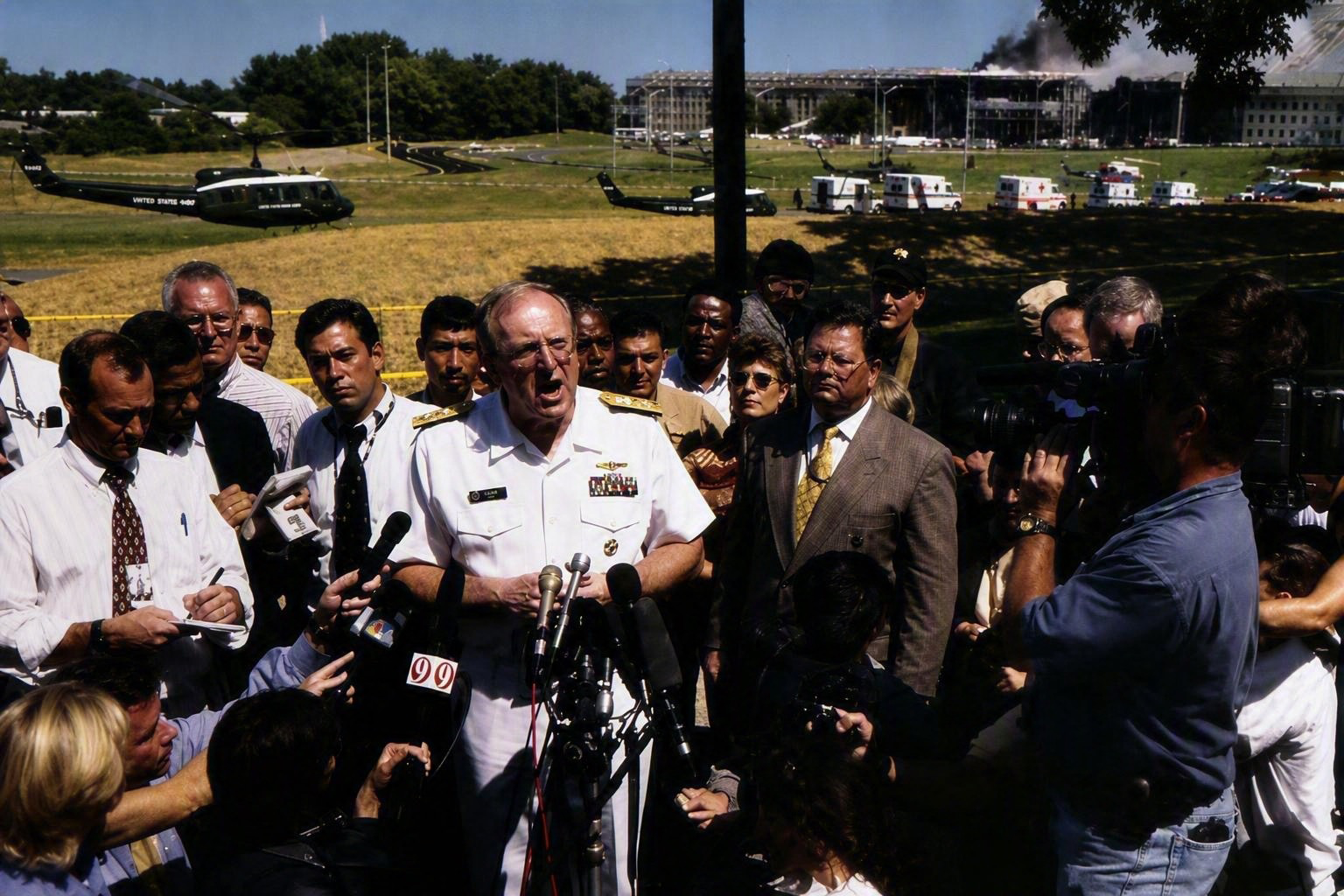
After opening a makeshift press center at the Navy Exchange Citgo station near the Navy Annex, Rear Admiral Craig Quigley ’75 became the first official voice of the Defense Department following the attack on the Pentagon. He assured Americans and the world that the Pentagon had been struck a grievous blow, but the United States military was still intact, and command and control was firmly in place. His efforts helped to calm our fears that day. He is very proud of the role he played on 9/11. Here is his account of that day:
September 11, 2001 was a beautiful fall day in Washington, DC—bright blue skies, cool, dry. Gorgeous sunrise that morning as I was driving to the Pentagon, arriving about 6 a.m. Assistant Secretary Clarke was holding her normal morning meeting in her office when the first plane hit the World Trade Center tower. We all turned our attention to the TV coverage of what we unanimously believed was a tragic accident, then resumed our meeting. When the second plane hit not long after, it was only seconds before Assistant Secretary Clarke was summoned to Secretary Rumsfeld’s office (I was not to see her again until late afternoon at the Citgo station). Not long after that, the plane hit the Pentagon (directly opposite of where my office was located). Those seated near the press corridor felt the impact; those moving about (including me) did not. But only minutes later, smoke began to drift down the corridor and the evacuation alarm sounded, so 20,000 people started heading for the exits. I put my classified in my safe, grabbed my cell phone and headed for our designated muster location near a flag pole outside the Mall entrance. Gratefully all hands were present or accounted for. Next order of business was trying to establish communications with Secretary Rumsfeld via cell phone, but that was not to be; all cell phone networks were clobbered (it was to be about three days before I could use my cell phone). Blackberries and texting were just coming into use at that time, and very few people possessed that technology (I was not one of them!). I grabbed about 3-4 people from the DoD newsdesk and we started walking and hitching rides around the Pentagon building, searching for a site to set up a media center. We found it at the Navy Exchange Citgo station near the Navy Annex, about a half-mile from the Pentagon. I walked into the station, identified myself to the manager and said, “I need to take over your station.” With no hesitation, she said, “It’s yours!” and we used the station—and its precious landline telephones—for the next several hours as a base of operations. Many news organizations—particularly visual media—had figured out by this time (approximately 1300/1400) that the Citgo station was the best possible vantage point for visuals of the airliner’s impact point in the Pentagon, and were gathering more by the minute right outside our door. After establishing communications with the Secretary, I stepped out for the first of several updates to the gathered media representatives and was able to speak with confidence about what was going on—locally and globally. This was the first official briefing to the Pentagon Press Corps and others, and was broadcast live around the world. Later that afternoon, Assistant Secretary Clarke came to the Citgo and briefed reporters, then we shut down the press center around 1900 as Secretary Rumsfeld was adamant that he personally brief the Pentagon Press Corps from the Pentagon, and did so at approximately 2000 that night. I remember getting home around 0300 the next morning. My most powerful remembrance of that day was the glance I took at the Pentagon just before my first press briefing. It was burning fiercely against that bright blue sky, with clouds of dark smoke climbing high into the sky. It is an image that will always be with me.
In Memoriam
In a few short hours on 11 September 2001, and in the last 10 years and two wars since, tens of thousands of Americans have lost their lives in the name of freedom. Some were innocent bystanders, in the wrong place at the wrong time and subjected to the destruction that extremism and hatred create. Others chose to lay down their lives in combat overseas, defending the people of America by eradicating the enemies of democracy worldwide. Among those who America has lost, numerous carried the duty and mission of their alma mater to their dying breath. Their lives are celebrated here.
On 9/11:
Captain John D. Yamnicky Sr. ’52, USN (Ret.) Captain Yamnicky was born in Barren Run, PA. He was commissioned with the Class of 1952 and was deployed to command a Navy attack squadron in Korea. Captain Yamnicky served a total of two tours in the region. After spending a few more years on bases and aircraft carriers, he became the director of the U.S. Navy Test Pilot School in 1972. Retiring in 1979, John became a consultant to the Test Center at Patuxent River. Captain Yamnicky was aboard Flight 77 en route to Los Angeles on business for a military contractor, Veridian Engineering.
Rear Admiral Wilson “Buddy” Flagg ’61, USNR (Ret.) Rear Admiral Flagg was commissioned with the Class of 1961 as a fighter pilot. He served three tours of duty in Southeast Asia during the Vietnam War. By the time his tours were complete, he took on dual responsibilities as both a captain for American Airlines and as an officer in the Naval Reserve. He retired as a Rear Admiral in 1995 and retired from American Airlines in 1998. Over the years, Rear Admiral Flagg had set a record as only the fifth person in history to log more than 3,000 hours in an F-8 Crusader. Rear Admiral Flagg and his wife were aboard Flight 77, headed for a family gathering in California.
Kevin P. Connors ’69 Connors was born in Boston, MA, and attended Boston College High School. Winning an appointment, he was commissioned an Ensign with the Class of 1969. After completing his tours, he earned an MBA from Dartmouth and entered the New York Financial world. Bouncing between New York and Florida, Connors made a name for himself in the bond trading business, starting, running and selling his companies. He held positions throughout Wall Street and made waves in the bonds departments of JP Morgan and Morgan Stanley. Connors was hard at work in the World Trade Center on 11 September.
Captain Charles F. Burlingame III ’71, USNR Captain Burlingame, or “Chic” to those who knew him, was born in St. Paul, MN, and dreamed of being a pilot his whole life. After receiving a bachelor’s degree with a major in science from the Naval Academy in 1971, Captain Burlingame graduated with honors from the Navy “Top Gun” School. Serving aboard SARATOGA, Captain Burlingame flew F-4 Phantoms until his retirement in 1996. After leaving the Navy, he took a job as a pilot for American Airlines. He was piloting American Airlines Flight 77 on 11 September.
Kenneth M. McBrayer ’74 McBrayer was a Georgia native who loved the water. He graduated from the Academy in 1974 and spent five years in the Navy as an engineer on several ships, including the aircraft carrier SARATOGA. He divided his time between Manhattan, NY, and DC, where his wife lived and went to law school. Both loved sailing on the Chesapeake Bay. He was at work on the 104th floor for Sandler O’Neill + Partners in Two World Trade Center when the plane hit.
Kenneth E. Waldie ’78 Waldie was born in Pittsburg, PA, attended NAPS and received his commission with the Class of 1978. After completing his obligations, Waldie went to work for Raytheon. Over his 17 years as an engineer at Raytheon, Waldie stayed dedicated to his children, supporting them in their athletic endeavors and being widely respected as both a supportive father and a valued member of the community. His son, Jeff, was in the Coast Guard and was among the first in the family to hear the news. A change in itinerary put him aboard Flight 11 that crashed into the North Tower.
Captain Gerald F. DeConto ’79, USN Captain DeConto was born in Sandwich, MA, and was a high school soccer star before his appointment to the Academy. While on the Yard, Captain DeConto played rugby and graduated with a bachelor’s degree with a major in physics with the Class of 1979. Rising through the ranks, he served aboard EXCEL, FRESNO, HEWITT, LAKE ERIE and SIMPSON, also attending Naval War College and Naval Postgraduate School. Captain DeConto had been promoted to director of Current Operations and Plans and was at the Pentagon organizing a response to the crisis in New York from his office in the D Ring.
Lieutenant Commander Michael G. McGinty ’81, USN Commander McGinty was born in Wichita Falls, TX, but moved frequently during his youth as part of an Air Force Family. Commander McGinty received an appointment to the Naval Academy and was commissioned with the Class of 1981. He served as a nuclear engineer until his honorable discharge in 1989. An active member of his religious community, Commander McGinty was the chairman of his local board of deacons and a mentor in the confirmation program. He was working at Marsh USA as an insurance broker in the World Trade Center.
Captain Robert E. Dolan Jr. ’81, USN Captain Dolan was born in Florham Park, NJ, and, after high school, sought an appointment to the Naval Academy. Captain Dolan graduated with the Class of 1981 and was initially stationed on INCHON. Rising through the ranks, Captain Dolan had been on the Joint Chiefs of Staff and was the commander of JOHN HANCOCK by age 40. Friends and family described him as intelligent, loyal and worldly. Captain Dolan had recently been appointed as the head of Strategy and Concepts for the Chief of Naval Operations. His office on the first floor of D Ring was among those struck by Flight 77.
Commander Patrick S. Dunn ’85, USN Commander Dunn was born in Fords, NJ. He came from a Navy family—his father served in both World War II and the Korean War—and he decided by 14 that he wanted to be Navy too. Commander Dunn and his brother John both attended the Naval Academy. Commander Dunn served on INCHON, MONTGOMERY, THEODORE ROOSEVELT and LA SALE. He had recently been assigned to a position on the Chief of Naval Operations staff at the Pentagon. His office was among those hit by Flight 77.
Commander William H. Donovan Jr. ’86, USN Commander Donovan was born in Nunda, NY, and was commissioned at the Naval Academy with the Class of 1986. Commander Donovan served in Patrol Squadrons 11, 31 and 1, as well as serving aboard GEORGE WASHINGTON. Commander Donovan had been on the Chief of Naval Operations staff for a little over a year on 11 September. He was in the Pentagon when Flight 77 crashed and was among those missing and presumed dead.
Lieutenant Commander Ronald J. Vauk ’87, USNR Commander Vauk was born in Nampa, ID, and graduated from Nampa High School. He was commissioned with the Class of 1987 with a bachelor’s degree with a major in political science. Following nuclear power training, Commander Vauk served aboard GLENARD P. LIPSCOMB and OKLAHOMA CITY. He retired from active service in 1993 in favor of the Naval Reserve. Lieutenant Vauk worked for Johns Hopkins University Applied Physics Laboratory while obtaining a master’s in Business from the University of Maryland. Commander Vauk was serving the second day of his annual Reserve duty at the Pentagon on 11 September.
Lieutenant Jonas M. Panik ’97, USNR Lieutenant Panik was born in States College, PA, and was active in his community and varsity sports at Bellefonte High School. Lieutenant Panik was commissioned as an Ensign with the Class of 1997 with a bachelor’s degree with a major in history. Lieutenant Panik attended Naval Intelligence Officer’s Basic Course in Virginia Beach, VA, and then was stationed in Whidbey Island, WA, on Patrol Squadron 46. He and his wife had recently moved back to the East Coast for a new assignment as part of the staff of the Chief of Naval Operations Intelligence Plot. He was selected to be a Flag Intelligence Briefer. Lieutenant Panik was working in the Pentagon on 11 September.
Lieutenant Junior Grade Darin H. Pontell ’98, USN Lieutenant Pontell chose the Navy after his brother, Steve, was killed in a crash off LEXINGTON, wanting to pick up where his big brother left off. He was commissioned with the Class of 1998, designated as an Intelligence Officer. Lieutenant Pontell spent time deployed to the Mediterranean Sea and Persian Gulf aboard DWIGHT D. EISENHOWER while part of Carrier Air Wing Seven, providing tactical strike data for pilots. Lieutenant Pontell had recently been reassigned to a position inside the Pentagon. He was nearing the end of a 12-hour shift when Flight 77 crashed.
Alumni Killed in Action Since 9/11
Lieutenant Colonel David S. Greene ’86, USMCR Colonel Greene was killed by small-arms fire from the ground as he was flying an AH-1W Cobra helicopter in Anbar Province, Iraq, 2004.
Major William R. Watkins III ’89, USAF Major Watkins, the weapons system officer of an F-15E Strike Eagle, died when his plane went down during a combat mission in Iraq, April 2003.
Lieutenant Colonel Mario D. Carazo ’91, USMC Colonel Carazo died while supporting combat operations in Helmand Province, Afghanistan, July 2010.
Lieutenant Kylan A. Jones-Huffman ’94, USN Lieutenant Jones-Huffman died from gunshot wounds sustained after the SUV he was in was ambushed near Hilla, Iraq, August 2003.
Lieutenant Commander Erik S. Kristensen ’95, USN Commander Kristensen was killed while conducting combat operations when the MH-47 helicopter that he was aboard crashed in the vicinity of Asadabad, Afghanistan in Kumar Province on 28 June.
Major Megan M.L. McClung ’95, USMC Major McClung died when a roadside bomb blew up the truck she was riding in Ramadi, Iraq. She was the first female Marine officer to be killed in the conflict, December 2006.
Major Douglas A. Zembiec ’95, USMC Major Zembiec was leading a raid on insurgents with a unit of Iraqi soldiers he trained when they were fired upon in a small alleyway in Baghdad, May 2007.
Lieutenant Michael M. McGreevy Jr. ’97, USN Lieutenant McGreevy was killed while conducting combat operations when the MH-47 helicopter that he was aboard crashed in the vicinity of Asadabad, Afghanistan in Kumar Province on 28 June.
Sergeant Steve Morin Jr. ’97, USANG Sergeant Morin died west of Umm Qasr, Iraq, when an improvised explosive device detonated, overturning the Humvee he was riding in, September 2005.
Captain Jennifer J. Harris ’00, USMC Captain Harris died when the CH-46 Sea Knight helicopter she was piloting was shot down by insurgents in Iraq after completing a successful casualty evacuation mission, February 2007.
First Lieutenant Ronald D. Winchester ’01, USMC Lieutenant Winchester was killed by a roadside bomb while guarding convoys in Anbar Province, Iraq, September 2004.
Captain Matthew C. Freeman ’02, USMC Volunteering for a particularly dangerous mission, Captain Freeman showed exceptional courage in leading his team through heavy fire in the Kapisa Province of Afghanistan, August 2009.
Second Lieutenant James P. Blecksmith ’03, USMC Lieutenant Blecksmith was killed by sniper fire in Fallouja, Iraq, while clearing houses of possible insurgents, November 2004.
Lieutenant J. Brendan A. Looney ’04, USN Lieutenant Looney and 10 others were in a combat operation over the Zabul Province in Afghanistan when their helicopter crashed, September 2010.
First Lieutenant Travis J.L. Manion ’04, USMC Lieutenant Manion was killed by enemy sniper fire during an ambush while conducting combat operations in the Al Anbar Province of Iraq, April 2007.
Captain Brandon A. Barrett ’06, USMC Captain Barrett was supporting combat operations in the Helmand Province of Afghanistan when he was killed in action, May 2010.
Alumni Operational Losses Since 9/11
Commander William C. McCool ’83, USN Commander McCool and six of his colleagues were killed when the Shuttle COLUMBIA broke apart over the western United States, February 2003.
Commander Peter G. Oswald ’84, USN Commander Oswald died of injuries sustained during a military training exercise in southern El Salvador, August 2002.
Commander Kevin A. Bianchi ’85, USN Commander Bianchi was killed during a routine training mission with the Heavy Helicopter Combat Support Squadron 4 in Sicily, July 2003.
Lieutenant Commander William R. Muscha ’87, USN Commander Muscha died when his T-39 Sabreliner crashed into the Gulf of Mexico, May 2002.
Lieutenant Commander Robert E. Clukey III ’91, USN Commander Clukey died when his F/A-18 Hornet crashed in the Adriatic Sea during a routine training exercise, November 2002.
Lieutenant Commander Anthony R. Domino ’91, USNR Commander Domino died when he was on a training flight through rain and snow in an F5E Tiger 11 south of Fallon Naval Air Station in Nevada during a 10-day training cycle with the “Fighting Saints,” April 2003.
Lieutenant Commander Christopher C. Tragna ’91, USN Commander Tragna died when two planes collided during training at the Naval Air Station Patuxent River, April 2002.
Lieutenant Commander Scott A. Zellem ’91, USN Commander Zellem was one of four Navy officers who died when their S-3B Viking crashed on the island of Kita Iwo Jima during operations from the aircraft carrier JOHN C. STENNIS, August 2004.
Captain Matthew W. Bancroft ’94, USMC Captain Bancroft was killed in a refueling tanker crash in Pakistan, January 2002.
Lieutenant Commander Scott T. Bracher ’94, USN Commander Bracher died when his S-3B Viking jet crashed while making an approach to land at NAS Jacksonville, September 2005.
Lieutenant Joel A. Korkowski ’94, USN Lieutenant Korkowski was presumed dead after his F/A-18F Super Hornet fighter collided with another jet southwest of Monterey, CA, during training exercises, October 2002.
Lieutenant Commander Frank C. Wittwer ’94, USN Commander Wittwer, a pilot for Strike Fighter Squadron 97, died when his F/A-18C Hornet went down near El Centro Naval Air Facility in California, January 2006.
Lieutenant Terri S. Fussner ’96, USN Lieutenant Fussner died when her SH-60B Seahawk crashed into the Mediterranean Sea off the coast of Greece during a training flight, March 2002.
Lieutenant Thomas M. Adams ’97, USN Lieutenant Adams, an exchange officer with the Royal Navy’s 849 Squadron, was killed when two Royal Navy Sea King helicopters collided over the Persian Gulf, March 2003.
Captain Franklin R. Hooks II ’97, USMC Captain Hooks was on a routine training mission about 60 miles south of the Azores when his F/A-18 Hornet was reported missing, June 2004.
Lieutenant Raul D. Jimenez ’98, USN Lieutenant Jimenez died as a result of injuries sustained when his T-34C plane crashed during a training flight near Corpus Christi, January 2006.
Captain Seth R. Michaud ’98, USMC Captain Michaud died from wounds sustained from a friendly fire incident while participating in a training exercise as part of the Combined Joint Task Force counter-terrorism training in Djibouti, Africa, June 2003.
Lieutenant Matthew S. Shubzda ’98, USN Lieutenant Shubzda died in an F/A-18F Super Hornet collision over the Pacific off the California coast, October 2002.
Lieutenant Christopher H. Snyder ’00, USN Lieutenant Snyder died when the SH-60B Seahawk crashed into the Pacific just after launching from DEWERT, December 2005.
Second Lieutenant John N. Wilt ’00, USMC Lieutenant Wilt died when his T-39 Sabreliner crashed into the Gulf of Mexico, May 2002.
Lieutenant Brett Miller ’01, USN Lieutenant Miller was a Naval Aviator who crashed off the Gulf Coast of Texas during a training mission, October 2009.
Lieutenant Richard F. Andersen ’02, USN Lieutenant Andersen died when the SH-60F helicopter he was flying in crashed in the Nevada desert during a training exercise, May 2007.
Lieutenant John J. Houston ’02, USN Lieutenant Houston was a Naval aviator who crashed off the Gulf Coast of Texas during a training mission, October 2009.
Lieutenant Nicolas J. Juron ’02, USN Lieutenant Juron died when the SH-60B Seahawk crashed into the Pacific just after launching from DEWERT, December 2005.
First Lieutenant Brian R.S.J. Deforge ’03, USMCR Lieutenant Deforge died during an F-18 fighter jet training exercise in a mid-air collision while practicing dog fighting maneuvers when they crashed over Ft. Hunter Liggett, CA, June 2006.
First Lieutenant Michael L. Licalzi ’04, USMC Lieutenant Licalzi died in Al Anbar Province, Iraq, while he was a platoon leader in “A” Company, 2nd Tank Battalion, May 2006.
Captain Aaron D. Cox ’05, USMC Captain Cox died while on a training flight when the Super Cobra, carrying live ordnance, crashed over the San Diego County highlands, May 2009.