
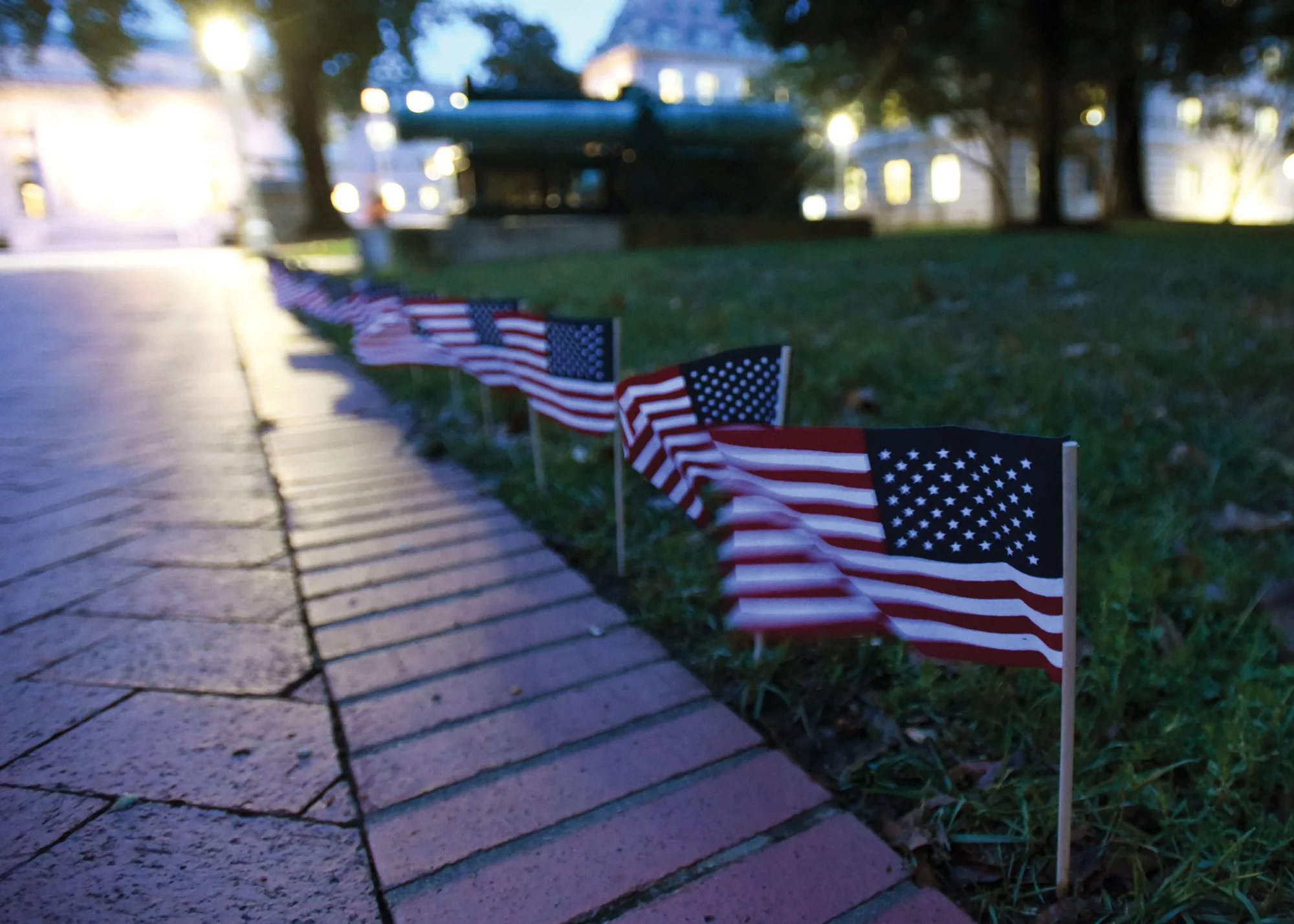
Everything Changed
Members of the Class of 2002 Reflect on the Events of 9/11 and How the Day Shaped Their Lives
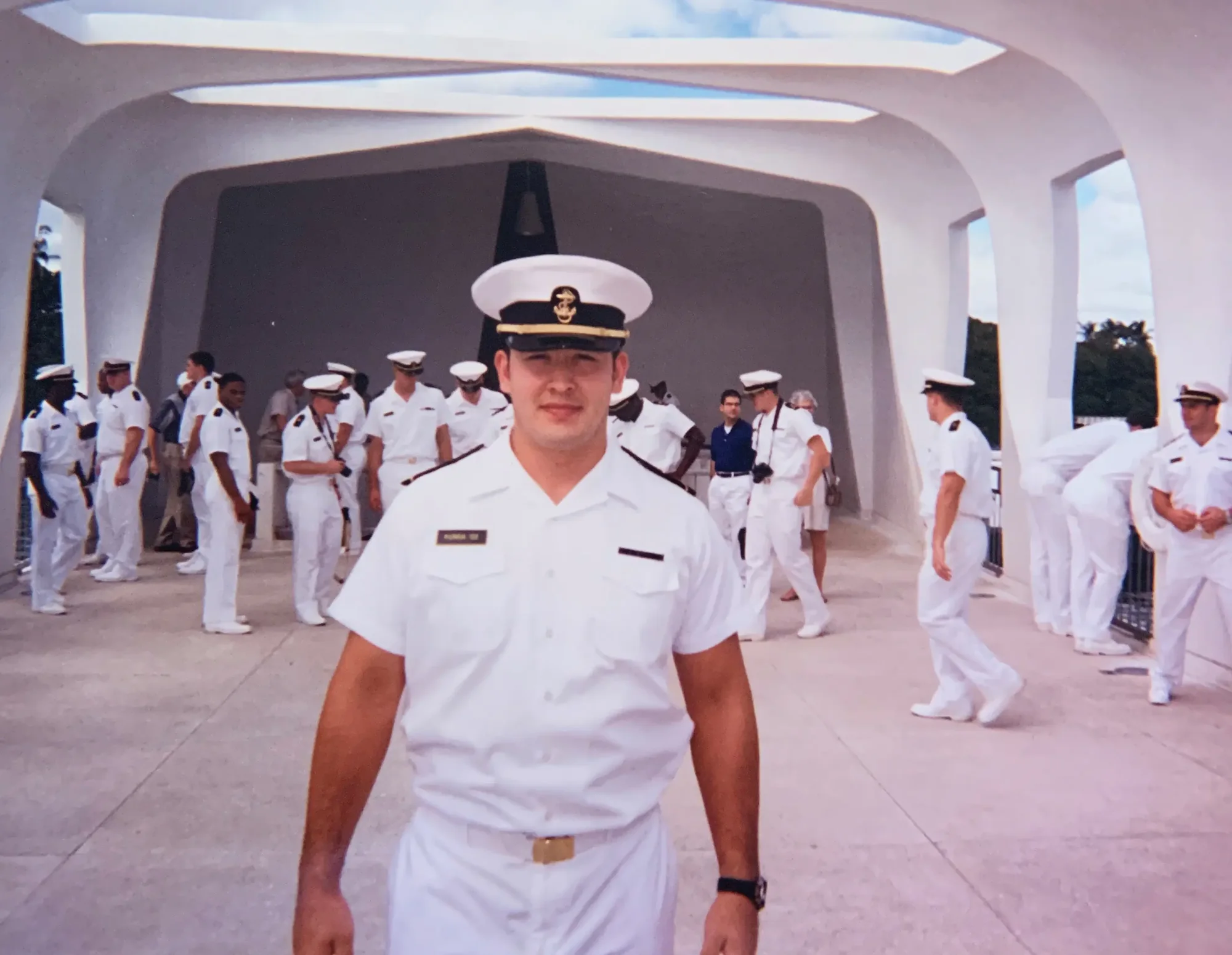
Commander Steve Cobos ’02, USN, was an unlikely and unorthodox midshipman while at the Naval Academy. A product of the Top Gun era, he envisioned a glamourized and idealistic version of the Navy in which he was a fighter pilot, executing daring maneuvers and saving the world.
“There’s a raucousness about the Navy that appealed to me,” Cobos said. “As a kid I always wanted to be a naval aviator due to my love of Top Gun. I thought it was the most amazing movie, and it is what made me want to attend the Academy.”
After arriving in Annapolis, Cobos quickly realized his perception of the Navy was wrong. Hailing from the streets of Phoenix, he had built up a resistance to authority, which led him to challenge the rules and regulations that were the reality of the Navy, and the Academy. He was frequently on Yard restriction for minor infractions, but his desire to be a pilot kept him focused and moving forward.
“Once I got there, I realized the Naval Academy wasn’t a good fit with my personality,” Cobos said. “I tested authority at every turn. I really undervalued what the Academy was teaching me the entire time I was there.”
However, Cobos flourished in the boxing ring. He was a three-time Brigade boxing champ (2000-02) and won the national championship his second-class year. In recognition of his achievements, the Academy awarded him the Emerson Smith Sportsmanship Award in 2002.
Cobos rose early on the morning of 11 September 2001 because the boxing team had morning runs, starting at 5 a.m. After returning to Bancroft Hall, Cobos showered, finished his homework and prepared for the day.
He didn’t have class the first hour, so he turned on his roommate’s radio to listen to music when the news bulletin broke in to announce a small plane had struck the World Trade Center.
“I remember thinking, ‘How could someone accidently hit that building?’” Cobos said.
He turned off the radio to head to class. Making his way through the tunnels, he popped out in the student lounge under Rickover Hall. There, he encountered a crowd of 50 classmates around a TV that was rarely on, watching smoke pour out of the North Tower. In what seemed like only moments later, the second plane hit the South Tower and everyone watching knew the world had changed forever.
For many in the Class of 2002, 9/11 was a defining moment that shaped their time at the Academy and who they are as leaders.
‘How Does This Happen?’
Unlike Cobos, Amanda (James) Casari ’02 knew she belonged in service long before she stepped foot on the Yard. Navy was in her blood. Her grandfathers served in World War II. Her father was a naval officer. Her brother enlisted.
Casari easily found a role to play at the Academy. As a firstie, she was vice chairman of honor investigations on the honor committee. At the time, Bancroft Hall was undergoing renovations, so some of the upperclassmen stripers were relocated to Ricketts Hall for the year.
She remembers strolling across the Yard that morning and noting the clear blue sky. She was headed to the library to attend a seminar on how to research online using the internet. When she logged on after class, none of the news sites were working.
“I thought, ‘this is odd,’” Casari said. “Then someone mentioned they heard a plane had crashed into the World Trade Center. I figured it was something like a Cessna.”
She packed her stuff and headed to Rickover for a robotics lab. When she approached the student lounge, she found a large group of people gathered around the TV.
“Then someone mentioned they heard a plane had crashed into the World Trade Center. I figured it was something like a Cessna.”
— Amanda Casari ’02
“That’s when I saw the news that it was a passenger plane,” Casari said. “Everyone was super quiet. People kept joining the crowd to watch what was happening. At the time, we didn’t understand the significance. When the bell rang, we ran off to our classes like good little rats.”
Major Ronnie Choe ’02, USMCR, was on the battalion staff his firstie year, which meant he could sleep in instead of going to morning company formations. He was hustling to his first class of the day shortly before 9 a.m. when his good friend and company sergeant major, Eric Smith ’03, stopped him on Stribling Walk to ask if he’d heard the news that a plane struck the World Trade Center.
“I’m thinking it’s just a big accident, so I run to class,” Choe said. “Interestingly, my first class of the day was counterterrorism. When I arrived, the projection TV was turned to CNN. I started asking my classmates what was going on. About five minutes later, the second plane hit the South Tower. We watched it live on CNN.”
Shortly after the second plane hit, sirens were sounded across the Yard. In his time at the Academy, David Kunda ’02 had never heard those alarms blaring outside of a training exercise. Orders were given for midshipmen to report back to Bancroft Hall and await further instructions.
“I tried to call my parents (in Georgia) and the call wouldn’t go through,” said Kunda, who now serves as president of a commercial mechanical contracting company in Charleston, SC. “I headed to the wardroom where a bunch of people were huddled up watching the news. People started speculating about an intentional terrorist attack. You could hear fighter jets flying overhead. You start to think about whether a dorm filled with 4,000 future naval officers might be a prime target. You start to wonder if everybody going back to Bancroft might not be the best idea.”
‘This is What I Came Here For’
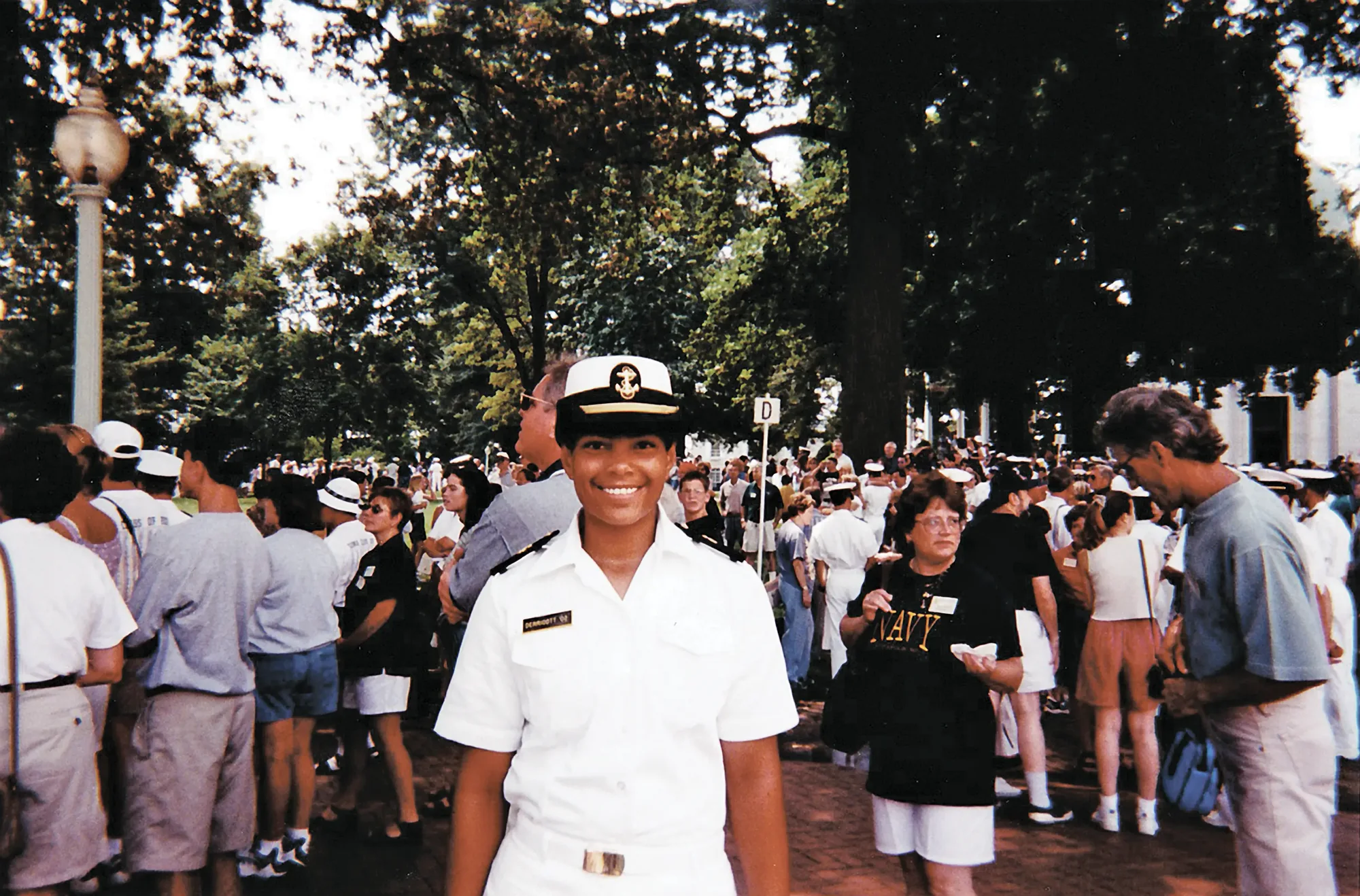
Liz (Derricott) Cianci ’02 remembers every moment from that morning. As second battalion commander, she was midshipman duty officer (MDO) that day. She was among a small group of stripers tapped to attend a leadership training with Navy admirals and Marine Corps generals.
“We were there less than 10 minutes when someone barged in and said, ‘I’m really sorry to interrupt but you have to turn on the news,’” Cianci said. “Shortly after that, my pager started going off.
“Part of my role as MDO was to contact all my other stripers and get all the midshipmen back to Mother B and do a muster. Once everyone was accounted for, we were on lockdown.”
Immediately, security was heightened across the Yard. The first thing Choe noticed when he got back to Bancroft were the midshipmen standing in various entryways. None of them were armed, they were just told to establish some line of security to keep tabs on people coming in.
“I’m looking at this youngster third class midshipmen thinking ‘What are you going to do?’” Choe said. “He’s just standing there in his uniform, not even in battle rattle, checking my ID.”
Both of Casari’s roommates at Ricketts were enrolled in golf as their elective. So, they were across the Severn River at the golf course that morning.
“When they left the Yard that morning on their shuttle bus, there were a couple Marines standing watch at the gate,” she said. “When they came back, the gate was lined with sandbags and there was a .50 cal(iber) machine gun staring down every vehicle coming toward it.”
Cianci recalls a feeling of all hell breaking loose.
“There was so much information flowing, so much misinformation,” she said. “My role was to stay on the phone with one of the aides at the White House to get continual updates on what was happening and pass those to the Academy command center. I consider myself fortunate to have been MDO that day. I gained incredible experience working under pressure and dealing with a crisis.”
Nine days later, on 20 September 2001, President George W. Bush announced the United States was at war.
“There was all this speculation,” Cianci said. “We didn’t know what this meant for us. Would they graduate us early? We just had no idea. But it was also the realization of what it meant to be at the Academy.
“You start to wonder if everybody going back to Bancroft might not be the best idea.”
— David Kunda ’02
“This is what I came here for. I came here to be a military leader. And this is what being a military leader is, it’s taking your troops into peril. We’re at war, and I need to be fully prepared for that.”
‘A Sobering Reality’
Although tensions were high in the days and weeks following 9/11, for the most part the Class of 2002 enjoyed a relatively normal firstie year. Still, the gravity of the events and their impact were never far from the midshipmen’s minds.
“We were the first class that was going to be involved on the Global War on Terrorism that graduated from the Naval Academy, who weren’t already a part of the fleet or the Marine Corps,” Kunda said. “I think a lot of us understood that because we were the first class, when we looked at the midshipmen to the left or to the right of us, there may be some who were not going to make it through to the end of the war. It was a sobering reality.”
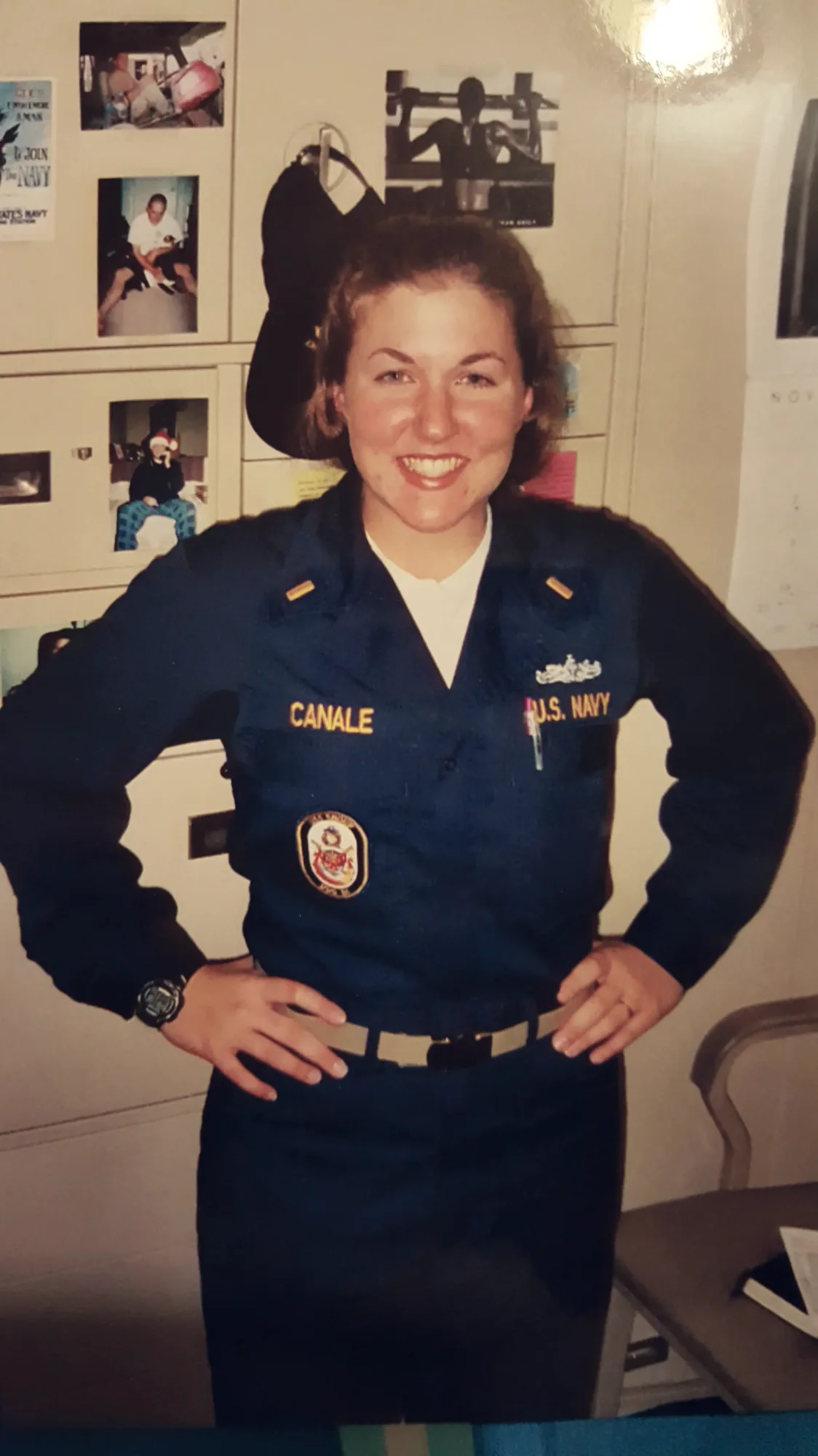
Following graduation, members of the Class of 2002 headed off to train in their areas of specialty and to prepare for deployment. Like many junior officers, Casari spent a lot of time on deployment, almost three years out of four during her years of active service. Her first deployment was on a new destroyer prowling the coastlines of Mexico and Central America on drug enforcement operations.
“The thing about 9/11 is that it did not impact everyone equally, even for deployments,” Casari said. “There were definitely some service branches and MOS’s and roles who bear the brunt of that war more than others.”
Cianci deployed to the Middle East on a guided missile destroyer, executing a lot of wide patrol operations in the Persian Gulf.
“We lost friends and classmates, which was always a possibility whether 9/11 happened or not, but losing people made the responsibility of continuing our mission that much more important,” Cianci said. “You don’t want their lives to be lost in vain. It also made me realize how quickly the world can change; 9/11 happened in an instant. Going through that made me appreciate the hard work we did a little bit more.”
Kunda did five patrols as a submarine officer. He relished the camaraderie among the crew and is still in touch with many of his fellow officers, some of whom are 05’s and 06’s and in command of their own submarines now.
“We all stay in touch,” he said. “I’m sure they’ve had plenty of other crews they served with, but that junior officer tour, that first crew coming out of the Naval Academy that you serve with, it just hits a little different. Especially because of what we were going through in that time period, I think it just stayed with us a lot longer.”
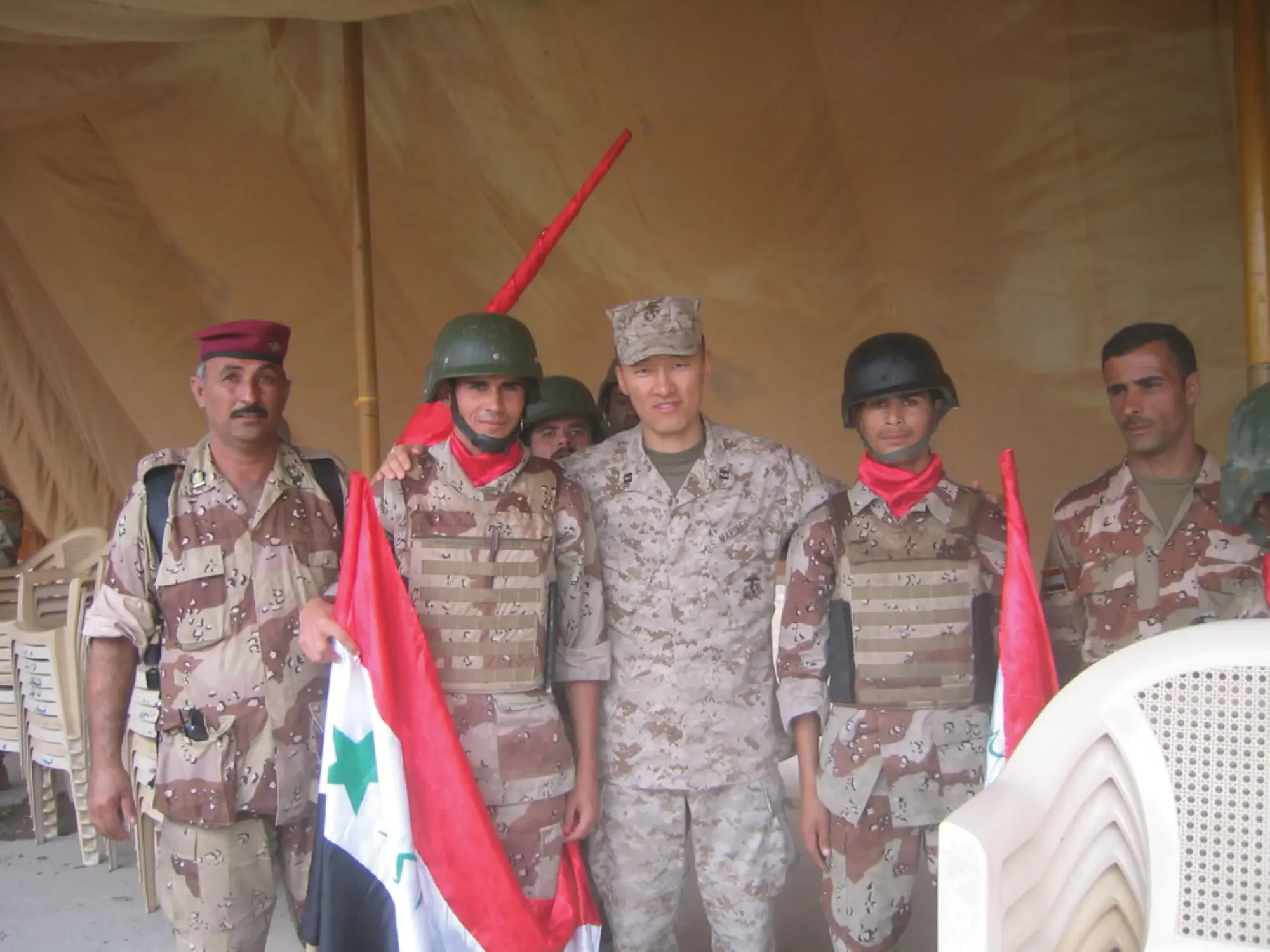
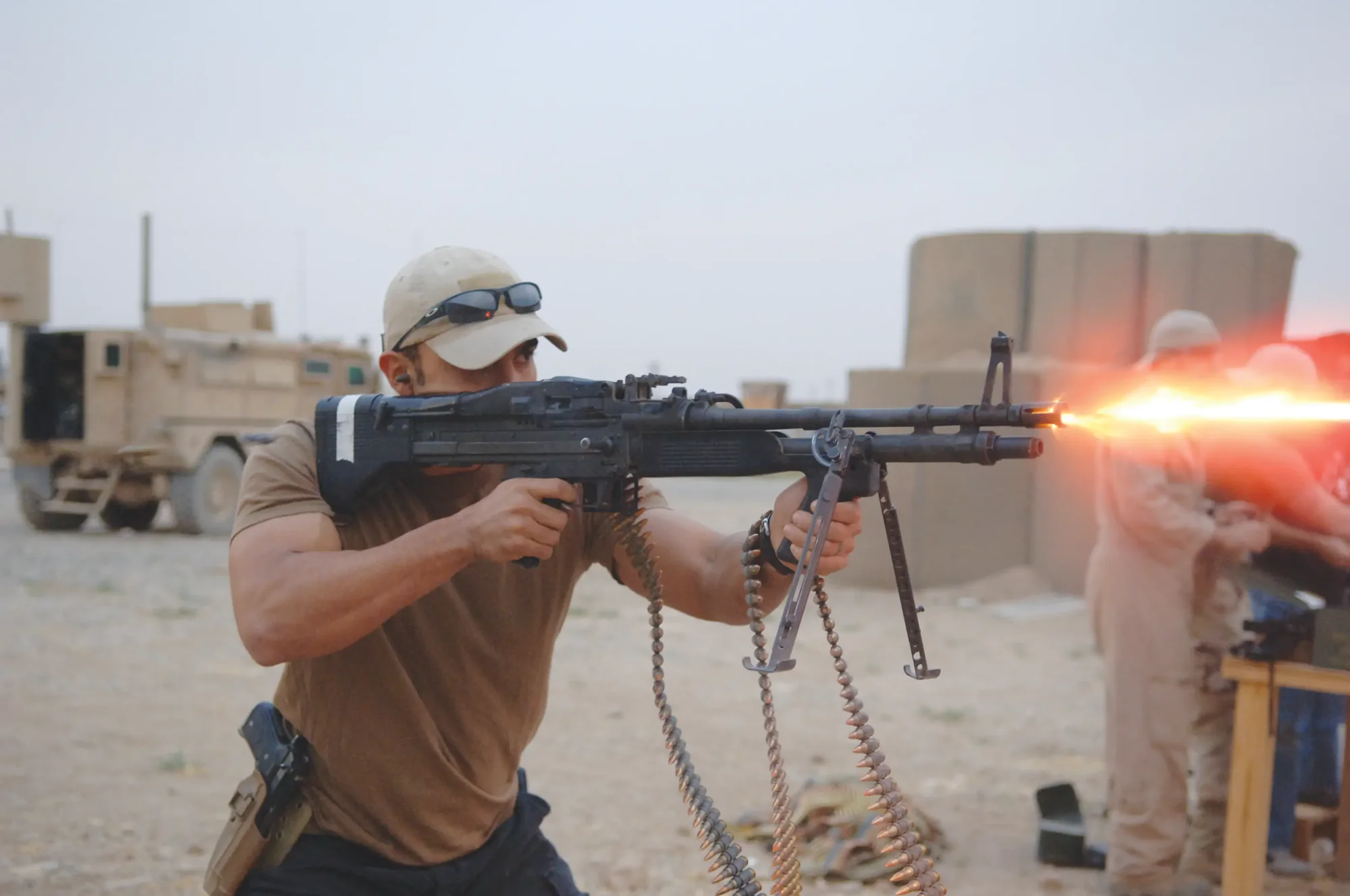
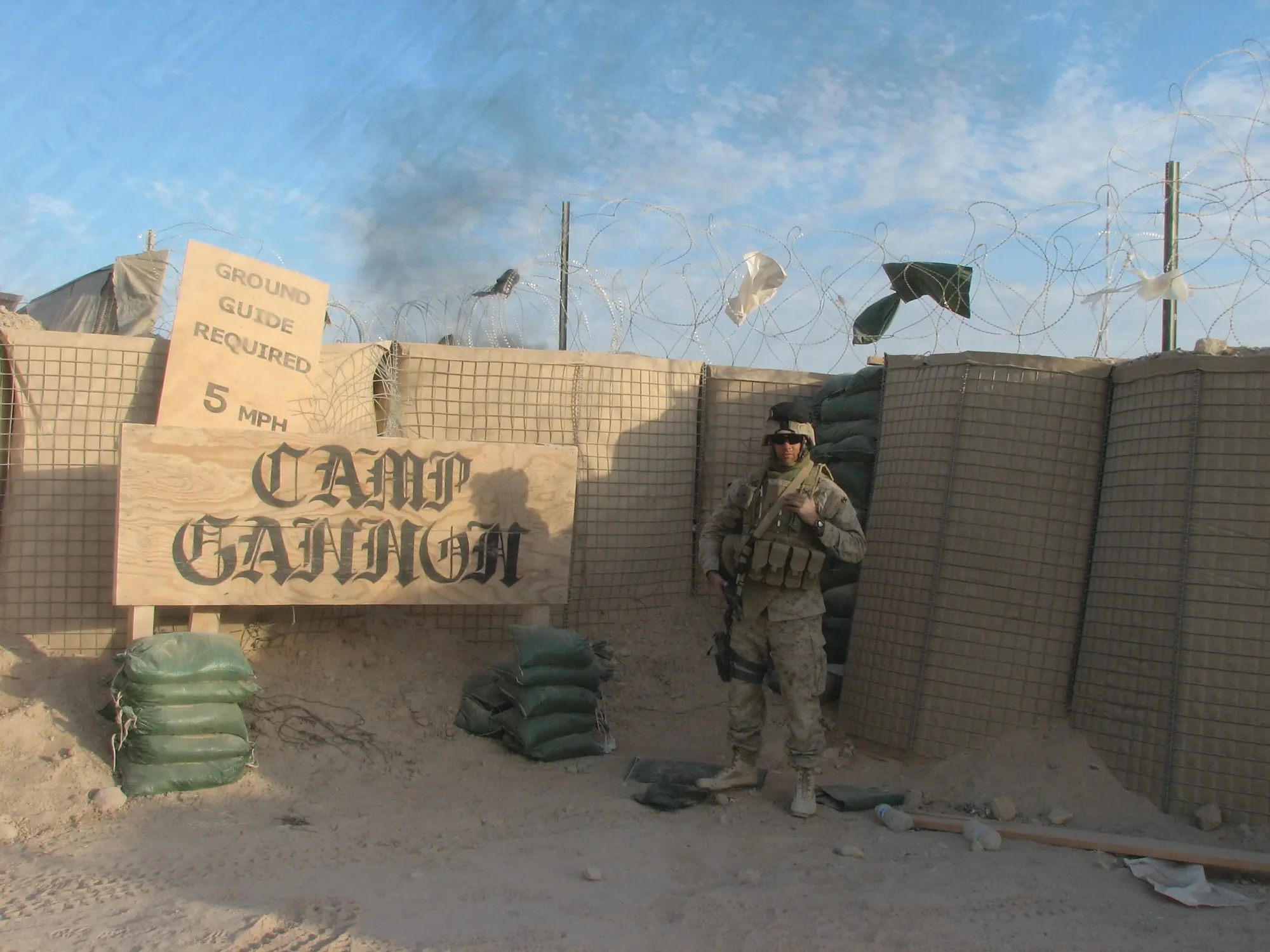
Choe deployed five times in seven years, four of them combat deployments. His first combat deployment was to Camp Gannon, situated between the border of Syria and Iraq.
“It was a very austere place, living conditions were horrible,” Choe said. “But the camaraderie was tight. As the company intelligence officer, I diffused human intelligence reports which really helped me understand the bigger picture. I was able to focus on the company level, and then how does that impact the battalion level and so forth. I also trained to use scout snipers. There was constant action—mortar fires, snipers going out, engaging threats.
“When you’re in your early 20s, this invincibility complex kicks in. As a Marine infantry officer, I was excited to lead Marines into combat. It wasn’t so much that I was brave, more that I was young and dumb. As a Marine, your first priority is the mission. I wasn’t worried about myself, I wanted to know that I could do the job. Everything I’ve been training for over the last four years is about to be tested.”
Lieutenant Colonel Seth Lynn ’02, USMCR, said his company commander at the Academy, Captain Richard Gannon, USMC, inspired him to go into the Marine Corps. Gannon was at the Pentagon on 9/11. Lynn remembers Gannon shouting as he relayed his experiences of the day, because his eardrums were rocked by the explosion. Gannon was killed 17 April 2004 by enemy action in Anbar province, Iraq.
“For me, 9/11 solidified my desire to go into the Marine Corps,” Lynn said. “At the time, it felt like the Pearl Harbor of our generation. Being from New York, I wanted to get some payback and to do my part to prevent something like this from happening again. It felt like destiny, although in reality, I never set foot in Afghanistan.”
As for Cobos, he never realized his Top Gun dream. During pre-commissioning physicals, it was discovered that he had a genetic defect that causes a heart murmur, a condition that’s non waiverable for flight.
He started to backslide and his disregard for the rules grew. He racked up demerits and restriction for major offenses—possibly more than anyone else who graduated in his class, earning three Black N’s along the way. His dream was gone. He questioned whether he even wanted to be at the Academy anymore.
“I was in a tailspin,” Cobos said. “Everything I’d envisioned for my future in the Navy since I was 8-years-old just went out the window. I didn’t know if I wanted to keep going down the path I was on in the Navy.”
That was until he watched the towers fall on 9/11. Cobos had reached out to his company officer and asked him for advice following his heart diagnosis. His company officer, a SEAL, told him to look into Explosive Ordinance Disposal.
“I had never heard of EOD”, Cobos said. “I was intrigued, but it was a long shot.”
Relying on his physical fitness from boxing and a summer of yard restriction going into his firstie year, he improved his swimming and eventually service selected EOD as a special operations officer.
Following nearly three years of difficult schools and training, Cobos began to deploy in support of the Global War on Terrorism. As a member of the special operations community, Cobos quickly became a multiple deployer. Eleven deployments in all, conducting combat operations and disposing of improvised explosive devices (IEDs) in Iraq, Afghanistan, Yemen, Somalia, Libya, Tunisia and Saudi Arabia.
“There was so much information flowing, so much misinformation.”
— Liz (Derricott) Cianci ’02
“Looking back, it’s a little embarrassing how I chased the wars after 9/11,” said Cobos, who recently took command of Mobile Diving and Salvage Unit TWO. “I wanted to live the ideals, to prove myself. So, I joined an organization that was constantly engaged in conflict and it felt right.”
“I was good at fighting. I was good at dismantling IEDs. I was good at killing the enemy. At the time, I didn’t reflect on how constant contact with combat would affect how I interacted with others, how it would affect my relationships with my wife and kids and how it would change me forever.”
‘Feeling of Destiny’
As a developer relations engineering manager at Google, Casari’s lessons learned from the Academy have become integral to her daily work, particularly applying a highly tuned and trained executive function to understand different scales and systems of change. Her time in service taught her how to lead teams composed of divergent personalities and backgrounds.
“In the Navy, there is no illusion that you get to choose your team or choose who you’ll be working with based on where they come from or their cultural values or what they want out of life,” she said. “You just have to figure out based on what you’re given and who you’re with, how you’re going to accomplish the mission. Knowing how to understand and respect other people’s boundaries while still being able to achieve an outcome has been immensely valuable for me.”
Lynn planned to leave the Marine Corps following his five years of service. Instead, the military has become inextricably woven into his life. He remains active in the reserve and in 2009, he founded a nonprofit, Veterans Campaign, to train veterans to run for public office.
That project evolved into the Master of Arts in Public Leadership program at the University of San Francisco, where Lynn now serves as director. The bulk of his students are veterans, including eight USNA alumni.
“I was very fortunate,” Lynn said. “I was never in serious combat. I was shot at a couple of times, and mortared, but never in a really tough situation—mostly just hoping not to drive over an IED. But my experiences as a Marine officer in Iraq were largely very positive and very formative.
“Captain Gannon inspired me to join the Marine Corps by sharing stories about how, even when we’re not at war, we’re still engaged in real-world operations. Whether that’s responding to tsunami relief, doing a noncombatant evacuation or operations in third-world countries, these missions are equally important.
“But that feeling of destiny, of graduating right into this war, never completely disappeared. A small part of me believes that maybe, before I retire, a major conflict will break out and I’ll play more than just a walk-on part. It’s unlikely, but it’s part of what keeps me engaged—that and the people I serve with.”
The 9/11 terrorist attacks were a seminal moment for the nation and midshipmen at the Academy. For many members of the Class of 2002, the day of infamy influenced their post-commissioning lives.
“I would not be the leader I am today without the Naval Academy,” said Cianci, a director of nursing in Reno, Nevada. “It taught me discipline, but most importantly, it taught me how to fail. Coming out of high school, I had never failed at anything. I learned how to navigate failure and how to ask for help. I learned I can get through some really hard things and come out on the other side.”
And their collective experience will serve future generations of midshipmen, too.
“When we were at the Academy, we were lucky if we heard from someone who’d been to Somalia or something like that,” said Choe, who works as a signals intelligence contractor in the Washington, DC, area. “Now, all these midshipmen are hearing from Navy and Marine Corps officers who have combat experience. They’re hearing about mistakes and lessons learned. They are going to be so much more qualified than we were.”
Cobos might not have intended to make a career in the Navy but 20 years after 9/11, he’s still serving his country.
“I see now that the Naval Academy was the steppingstone to what I was meant to do in the Navy,” Cobos said. “The discipline, acting with integrity, even the way I fold my clothes. It’s all baked into who I am.” ⚓
‘Whole World Just Changed’
The recollection of where we were when we learned about the tragic events of 9/11 is etched in most of our memories. Some members of the Class of 2002 shared their remembrances of that fateful day.
Angela (Pratt) Taylor ’02
We turned the TV on and watched the plane hit the second tower. We heard about the Pentagon and our professor left as his wife worked there. My mom did briefings at the time in the Pentagon.
The Brigade was ordered back to their rooms. I went into HERO role and started trying to check on anyone who had family in NYC, DC or PA. We ate in shifts. We put guards at every entrance to Bancroft Hall. Cell phones didn’t really work, so many people used AOL instant messenger to get ahold of family.
Lieutenant Commander Graham Plaster ’02, USNR
Walking to class, heard the news from another mid—showed up first and set up the projector. Our class watched everything happen live on a big screen. Walked to the next class. Teacher walked out, crying.
My fiancé was at St. Johns for her masters, living outside Gate 3. When everything got locked down, we stayed connected through AOL instant messenger.
Timothy Parlatore ’02
We were in the library when the first plane hit. We then went to a class on terrorism, where we watched the news on the big screen. I remember when the towers came down, the professor told us to take out our syllabuses and tear them up because “the whole world just changed.”
Wes Pass ’02
In Nimitz Library writing a paper on Bin Laden for my national security class (1998 Africa Embassy bombings focus). The instructor came in and told me to check the news. I thanked her and excused myself to get back to the hall and see about my company.
I remember the hits kept coming in almost equal intervals, no one knowing when they would stop or what was next. The Marines at the Academy set up security at the gates and the Coast Guard started helo flights on the water side.
Meals were staggered to reduce too many people being in one place and our new normal started to take hold. In the days that followed, pictures of the dead from the planes, towers and Pentagon began to fill the Rotunda, it was reminiscent of the book “A Sense of Honor” during Vietnam. A sobering time for our education and what was to come.