
Midnight Mathematics
Szemborski ’71 Helped Craft Post-9/11 Warfighting Funding Packages
Vice Admiral Stan Szemborski ’71, USN (Ret.), was back in the Pentagon less than 15 hours after the terrorist attacks of 9/11. The nation was at war, and the president needed a budget to fight it.
In the final minutes of 9/11, Szemborski, then a one-star admiral assigned to the Joint Staff at the Pentagon, was at home when a call came from the office of the Secretary of Defense. The country was still absorbing the shock of the terrorist attacks. Szemborski faced an 8 a.m. deadline for a plan to pay for the imminent military campaign.
The secretary wanted an emergency funding supplemental package on his desk within eight hours. Szemborski called Vice Admiral Steve Stanley ’75, USN (Ret.), who was a captain at the time, a fellow U.S. Naval Academy graduate and trusted colleague, and the two met at Szemborski’s Pentagon office at midnight.
The task was urgent, but it was not simple. It had to move fast enough to meet the moment and be sound enough to withstand scrutiny from the White House, Congress and every military branch with its own priorities. Szemborski contacted the service vice chiefs and invited them to send representatives if they wanted input. No one responded until after the 8 a.m. deadline.
So, he and Stanley worked through the night, relying on experience, judgment and what Szemborski later described as a firm rule: fund what was directly connected to the war effort.
By 8 a.m., the package was delivered to Secretary of Defense Donald Rumsfeld. It was approved by President George W. Bush. But the harder work came afterward, as follow-on requests arrived and each service branch sought resources for programs it believed necessary in a rapidly expanding war.
As a central piece to the funding mechanisms linked to the initial Global War on Terror operations, Szemborski said he was happy to have been involved from the outset.
“I’m pretty sure that the things that I recommended approval for saved people’s lives,” he said.
Szemborski was sent to the White House, where he was often the only uniformed officer in the room. The question was direct: justify how each request was tied to the war.
Sometimes the answer was yes. Sometimes it was no. Those decisions carried consequences. Senior leaders from the services were not always pleased when their priorities were rejected.
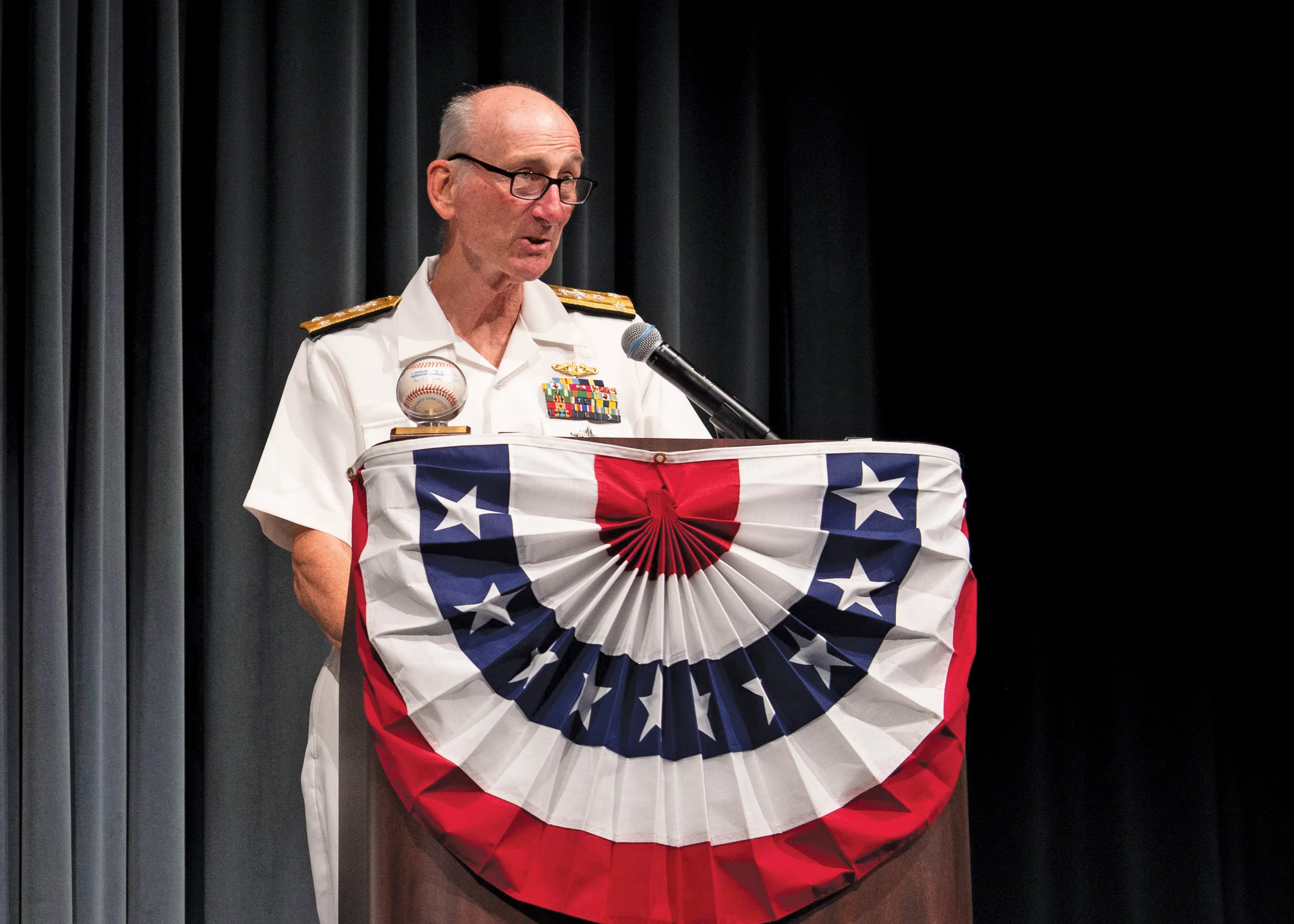
“There was a lot of unhappiness with the ones I said no to,” Szemborski said. “I was not very popular in some circles.”
The tension reflected a larger reality: in war, every branch could make a case for more resources, and many of those cases were compelling. Szemborski’s role was not to satisfy everyone. It was to defend choices that could be traced to facts, requirements and the immediate needs of the fight.
That approach had been shaped long before 9/11. At the Naval Academy, he served as a company Honor Committee representative, an experience that reinforced the obligation to tell the truth plainly. In the Pentagon, that meant opening with facts, even when they were unwelcome.
Rumsfeld, Szemborski said, expected that kind of rigor. He challenged ideas aggressively and forced subordinates to defend their reasoning. The exchanges could be blunt, but Szemborski understood the purpose.
“Don’t you ever stop telling me the whole truth,” Rumsfeld once told him. “There’s so few people around here willing to do that.”
Szemborski later helped review major funding decisions. He briefed Vice President Dick Cheney on the Army’s $30 billion move from a division-centered structure toward a brigade structure. He identified $60 billion in the Pentagon’s six-year plan for national debt reduction. For five straight days, he briefed senior civilian and military leaders, going item by item through possible cuts. Each proposal had defenders. Each decision required another round of explanation.
Support from senior Navy leaders helped. Walking a Pentagon hallway after unpopular decisions had angered leaders across the building, Szemborski was stopped by Admiral Mike Mullen ’68, USN (Ret.), then-Chief of Naval Operations. Mullen congratulated him for having “managed to tick off every single person in the Pentagon,” then added words Szemborski never forgot: “You’re doing God’s work.”
For Szemborski, the value of the work was measured not in budget lines but in lives. He believed the discipline to approve only what directly supported the war helped put resources where they mattered most.
“I was giving SECDEF what I thought, in my opinion, was needed for the war effort,” he said, “and yet I wasn’t spending money on things that weren’t directly related to the war effort.” ⚓