
Battlefield Marines
Got an Assist from Dilgren ’72
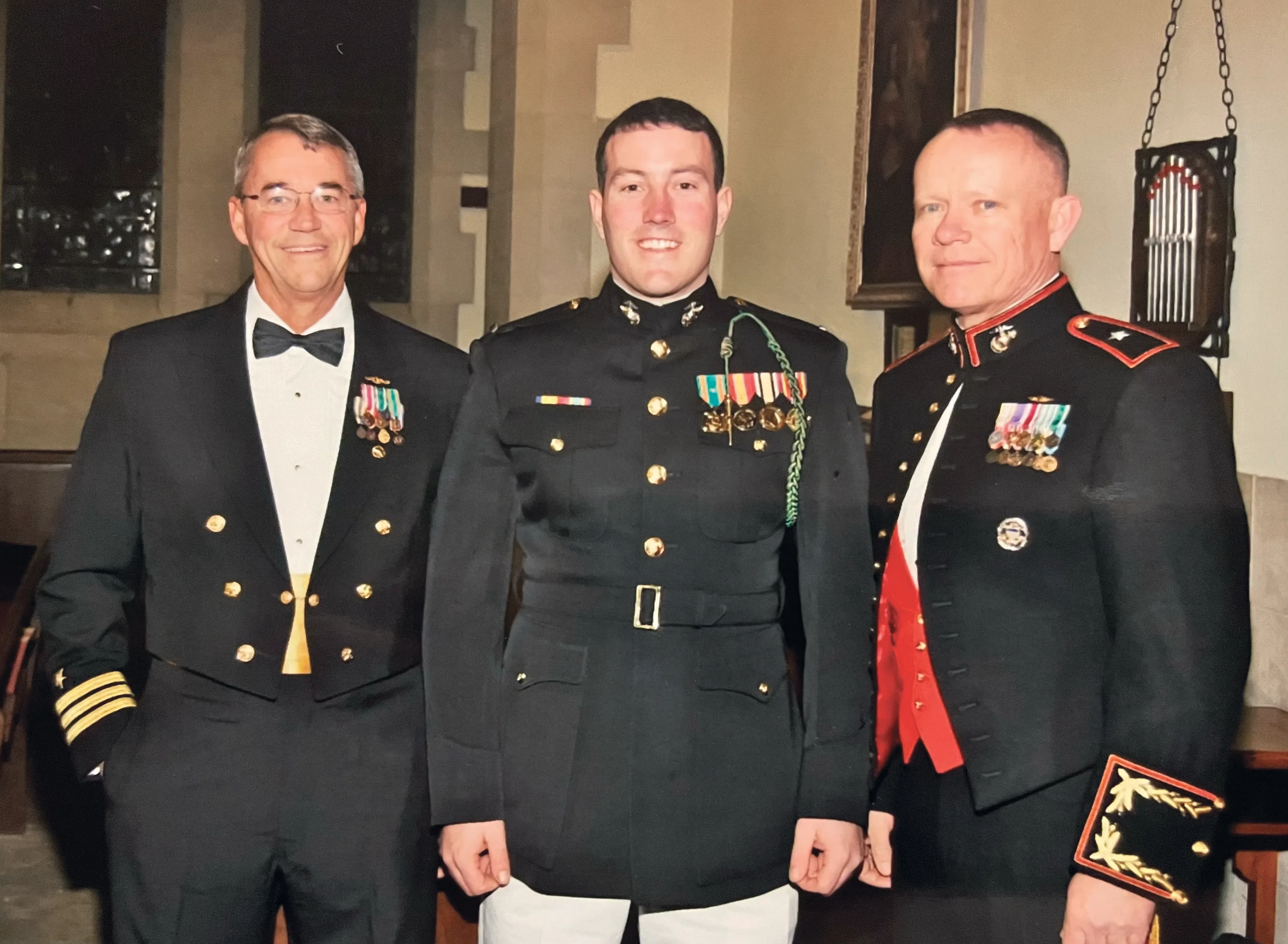
Commander Rik Dilgren ’72, USN (Ret.), wasn’t on the front lines during the Global War on Terror but he had an impact.
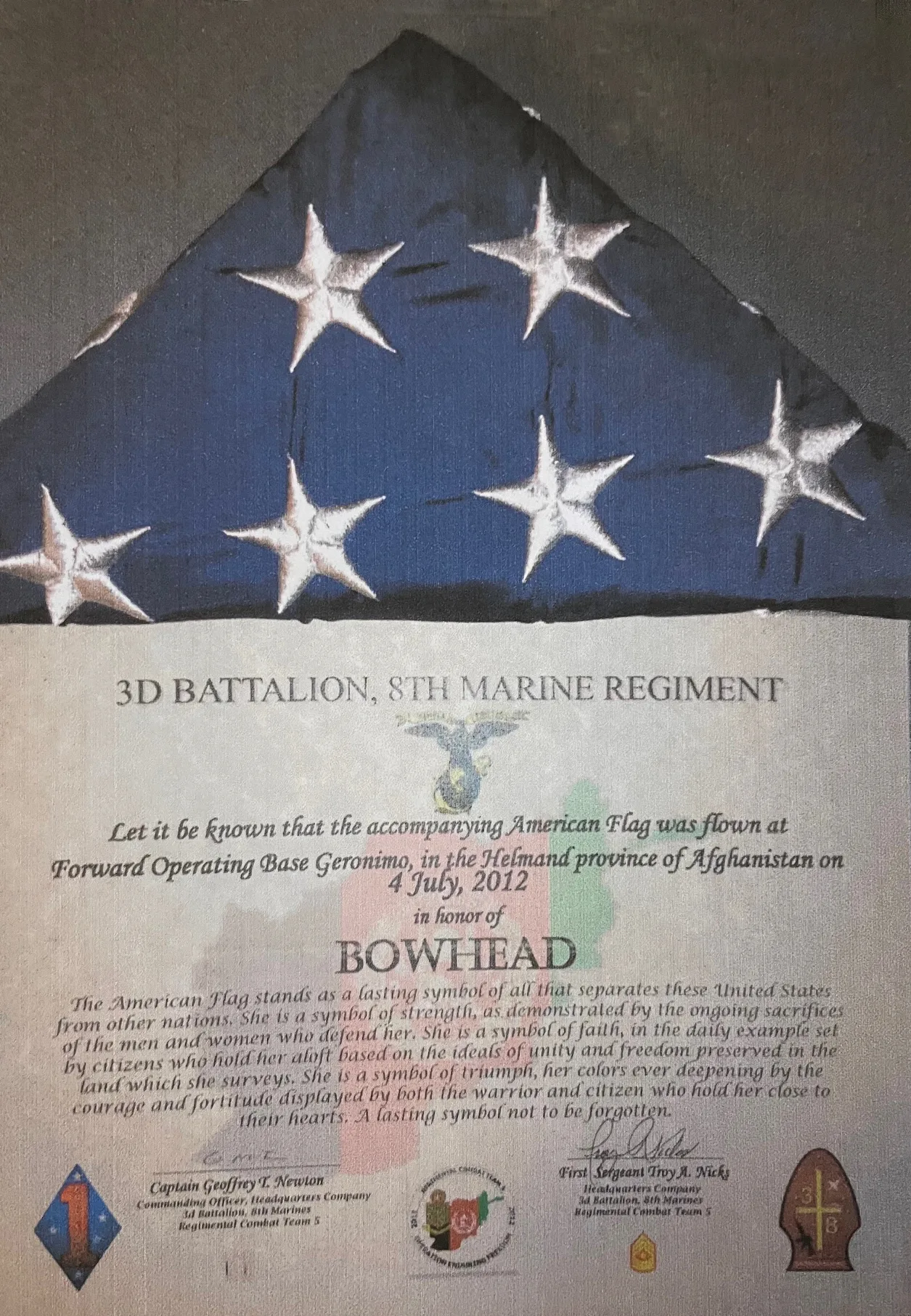
The retired submariner was executive vice president of Bowhead, a defense contractor, in Charleston, SC, in support of Space and Naval Warfare Systems Command (SPAWAR), now known as Naval Information Warfare Systems Command (NAVWAR), on 9/11. His firm was close to being awarded a sole source contract. It was asked by SPAWAR to delay the award for two weeks to accommodate emerging needs in support of the war.
That pause allowed Bowhead to increase the scope and size of the contract by 25%. This included installation of new fiber optic networks at FBI headquarters and field offices nationwide, imbedded intelligence support for Marine units deployed to Iraq and Afghanistan and creation and staffing of an operations center for the newly created Department of Homeland Security.
The company was also at the center of an urgent mission: providing life-saving resources to U.S. forces. Dilgren’s commitment was patriotic and personal—Marines serving in Iraq and Afghanistan. Among those were three in-laws, including his son-in-law.
The first major Marine Corps effort involved logistics support for mine-resistant ambush protective wrapping for vehicles. U.S. military vehicles routinely encountered improvised explosive devices (IEDs) implanted on roads. Bowhead ensured protective upgrades reached the field.
“It was exciting as a contractor to be able to contribute to this thing because we were not the warfighters, but it’s a necessary part of the support,” Dilgren said.
That support extended beyond vehicles. Dilgren’s teams also assisted with the tactical remote sensor system, an array that could detect motion, light, vibration and infrared signatures. Used around forward operating bases in Iraq and Afghanistan, the system helped Marines detect and track insurgent movement, particularly at night. The company recruited former Marine Corps intelligence specialists with the clearances and experience needed to embed with infantry units and train them on intelligence systems, networks and analysis.
Perhaps the most consequential Marine Corps tasking, Dilgren said, came in Afghanistan with the Biometric Automated Toolset, or BATS. The system collected fingerprints, facial images, iris or retina scans and biographical information, then matched that data against databases and watchlists. In Iraq and Afghanistan, biometrics helped U.S. forces distinguish civilians, friendly personnel, detainees, insurgents and wanted individuals. The technology was used in force protection, detainee operations, base access, intelligence work and local screening—a key benefit in helping distinguish friendly forces from adversaries who sometimes changed allegiances.
Dilgren’s contractor teams deployed with Marine infantry units in Afghanistan to operate and support the tool set.
“There were cases where the bad guys were identified and arrested based on the results of the (BAT) set work that my employees did,” Dilgren said.
“It was exciting as a contractor to be able to contribute to this thing because we were not the warfighters but it’s a necessary part of the support”
— Commander Rik Dilgren ’72, USN (Ret.)
The system became particularly valuable because identity in a counterinsurgency fight was often fluid. People used aliases, changed appearance or moved between roles. Biometrics gave Marines a way to connect a person in front of them to prior encounters, records or intelligence.
For Marines on patrol, at checkpoints or operating from remote bases, those capabilities translated into practical protection. Armor helped them survive blasts. Sensors helped them detect threats before contact. Intelligence systems helped them understand patterns. Biometrics helped identify who posed a danger and who did not. Together, the programs formed a chain of support designed to reduce uncertainty in dangerous places.
Dilgren credits speed and trust as the essential ingredients. Sole-source contracting allowed urgent requirements to move quickly, while established customer confidence helped the company respond when the need was immediate. Looking back, he said the work gave his second career uncommon purpose.
“It made the Marines more capable,” Dilgren said. “It made them more survivable.” ⚓